Ikenna Ahamz
WritingBooksTopicsAbout

Books I return to

The Forever Shelf

An unranked collection of books that continue to change how I think, feel, and see the world.

  • Cover of Atlas of the Heart by Brené Brown

    Atlas of the Heart

    Brené Brown

    Brown gave me a more precise vocabulary for emotions such as shame, fear, insecurity, and foreboding joy. I return to this book because naming those experiences helps me separate justified concern from reflexive pessimism, understand how they affect my relationships, and meet good news without immediately waiting for something to go wrong.

    Read full note

    Atlas of the Heart gave me a clearer vocabulary for emotions and helped me understand how shame, fear, and insecurity shape my relationships with other people and with my family. Brown’s idea of “foreboding joy” stayed with me because I often meet good news with cynicism, waiting for something to go wrong. Social media can reinforce that posture without helping me understand its source. This book gives me a researched framework for noticing the difference between justified concern and reflexive pessimism. I return to it because naming these feelings makes it easier to acknowledge my fears and let some of them go.
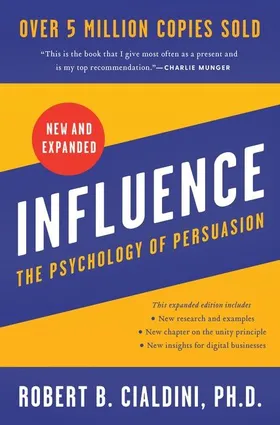

  • Cover of Influence: The Psychology of Persuasion by Robert B. Cialdini

    Influence: The Psychology of Persuasion

    Robert B. Cialdini

  • Cover of Trust by Hernan Diaz

    Trust

    Hernan Diaz

  • Cover of The Brothers Karamazov by Fyodor Dostoevsky

    The Brothers Karamazov

    Fyodor Dostoevsky

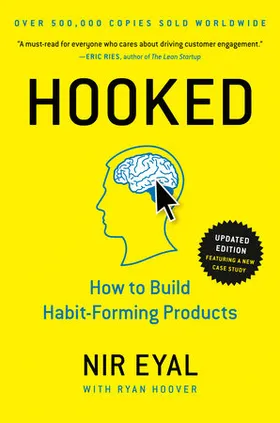
  • Cover of Hooked: How to Build Habit-Forming Products by Nir Eyal

    Hooked: How to Build Habit-Forming Products

    Nir Eyal

  • Cover of Social Media: A Critical Introduction by Christian Fuchs

    Social Media: A Critical Introduction

    Christian Fuchs

  • Cover of The Burnout Society by Byung-Chul Han

    The Burnout Society

    Byung-Chul Han

  • Cover of Anthropology from a Pragmatic Point of View by Immanuel Kant

    Anthropology from a Pragmatic Point of View

    Immanuel Kant

  • Cover of Thinking in Systems by Donella H. Meadows

    Thinking in Systems

    Donella H. Meadows

  • Cover of The Score: How to Stop Playing Somebody Else's Game by C. Thi Nguyen

    The Score: How to Stop Playing Somebody Else's Game

    C. Thi Nguyen

  • Cover of God, Human, Animal, Machine by Meghan O'Gieblyn

    God, Human, Animal, Machine

    Meghan O'Gieblyn

    O'Gieblyn connects artificial intelligence to much older debates about materialism, consciousness, belief, and meaning. I return to it because it prevents me from treating AI as a purely technical subject and reminds me that modern computing inherits philosophical questions about what a mind is and what it means to be human.

    Read full note

    I first heard about God, Human, Animal, Machine on The Gray Area podcast in 2023, and it opened a door into the philosophy and history surrounding artificial intelligence. O’Gieblyn moves between contemporary ideas such as Nick Bostrom’s simulation argument and much older debates about materialism and the nature of mind. I was still new to the history of AI when I read it, so discovering how modern computing inherits old philosophical questions was genuinely exciting. I return to the book because it helps me resist treating AI as a purely technical subject; it is also a story about meaning, belief, and what we think a human being is.

  • Cover of Amusing Ourselves to Death by Neil Postman

    Amusing Ourselves to Death

    Neil Postman

  • Cover of Men Explain Things to Me by Rebecca Solnit

    Men Explain Things to Me

    Rebecca Solnit

    Solnit draws large arguments about gender and power from painfully human stories, beginning with the absurdity of a man explaining her own book to her. I return to this collection because its precision remains current and because it keeps asking who receives authority, who gets heard, and what happens when confidence replaces knowledge.

    Read full note

    I was floored by the precision of Rebecca Solnit’s writing and by the way she draws larger arguments from deeply human stories. The scene in which a man confidently explains Solnit’s own book to her is funny, but the confidence behind the mistake also reveals something more troubling. I read the collection in late 2025, years after it first appeared, and its ideas still felt painfully current. That freshness is unfortunate, but it is also why I expect to return to it. As long as the world is still learning how power shapes who gets heard, it will continue to need readers of this book.

  • Cover of The Power of Now by Eckhart Tolle

    The Power of Now

    Eckhart Tolle

  • Cover of The Age of Surveillance Capitalism by Shoshana Zuboff

    The Age of Surveillance Capitalism

    Shoshana Zuboff

© 2026 Ikenna Ahamz

RSSEmail